When we think about dental health, we often focus on the obvious basics: brushing twice a day, flossing, and avoiding excessive amounts of candy. However, the health of your smile is determined by more than just your morning and evening routine. It is the cumulative result of the hundreds of small decisions and subconscious actions you take throughout the day.
Your teeth are incredibly strong—tooth enamel is actually the hardest substance in the human body, even harder than bone. Yet, despite this resilience, they are not indestructible. Many of us engage in daily habits that slowly chip away at our oral health, often without realizing the damage until it is too late. A cracked tooth, a receding gum line, or sudden sensitivity often feels like it came out of nowhere, but in reality, it is frequently the result of years of repetitive stress and wear.
Understanding these damaging behaviours is the first step toward prevention. By identifying the subtle ways you might be sabotaging your smile, you can make simple adjustments that preserve your teeth for a lifetime. Below is a comprehensive look at ten of the most common habits that destroy teeth, the science behind why they are harmful, and practical advice on how to stop them.
It seems harmless enough. It’s sugar-free, natural, and hydrates you. For many, munching on the leftover ice at the bottom of a drink is a satisfying, crunchy ritual. However, dentists almost universally cringe at the sound of someone crunching on ice cubes.
The Danger: The problem with chewing ice lies in the physics of crystal structures and thermal shock. Your tooth enamel is a crystal structure, and so is ice. When you mash two hard crystals against each other with the immense force of your jaw muscles, one of them has to break. While it is often the ice, it is frequently the tooth.
Furthermore, there is the issue of temperature. Your teeth expand and contract slightly when exposed to extreme heat and cold. When your teeth are cold from the ice, and you bite down hard, the enamel becomes more brittle. This can lead to microscopic cracks in the enamel surface. Over time, these micro-cracks can grow larger, eventually leading to a major fracture that requires a crown or even extraction.
Breaking the Habit:
We have all been there: you buy a new shirt and can’t snap the plastic tag off, or a bag of chips is sealed too tightly, or you need to unscrew a bottle cap and your hands are slippery. In a moment of impatience, you use your teeth. It is the ultimate convenience, but it is also one of the quickest ways to suffer a dental emergency.
The Danger: Your teeth are designed for one purpose: chewing food. They are effective at crushing vertically, but they are not designed to withstand the twisting, prying, or shearing forces required to open packaging or hold objects.
When you use your teeth as pliers or scissors, you apply pressure to the edges of the teeth, which are the thinnest and weakest parts. This can easily cause the edge of a front tooth to chip or shear off completely. In worst-case scenarios, the object can slip and jam into the gum tissue, causing lacerations, or the torque can fracture the tooth root, rendering the tooth unrestorable.
Breaking the Habit:

It is a common misconception that the harder you scrub, the cleaner your teeth will be. Many people attack their teeth with a stiff-bristle brush, thinking they are doing a good job of removing plaque. Unfortunately, "scrubbing" your teeth is not the same as cleaning them.
The Danger: Aggressive brushing causes two main problems: toothbrush abrasion and gum recession.
Breaking the Habit:
Teeth grinding, or bruxism, is a habit that often happens without you knowing it. While some people clench their jaw when they are angry or concentrating deeply, the most damaging grinding usually occurs during sleep.
The Danger: The forces exerted during sleep bruxism can be significantly higher than normal chewing forces. Because your protective reflexes are turned off while you sleep, you can grind with incredible pressure.
Breaking the Habit:
It is not just what you eat that affects your teeth; it is when and how often you eat it. If you are someone who grazes on food throughout the day or sips on a sugary coffee for four hours, you are putting your teeth at much higher risk than someone who eats the same amount of sugar in one sitting.
The Danger: Every time you eat or drink something containing carbohydrates or sugar, the bacteria in your mouth feed on it and produce acid. This acid attacks your tooth enamel. Your saliva eventually neutralizes this acid and helps remineralize the tooth, but this recovery process takes about 20 to 30 minutes.
If you take a sip of soda or eat a cracker every 20 minutes, your saliva never gets the chance to neutralize the acid. Your mouth remains in a constant state of high acidity, essentially bathing your teeth in acid all day long. This leads to rapid decay, often appearing as white spots or cavities between the teeth.
Breaking the Habit:
Nail biting (onychophagia) is a nervous habit that affects children and adults alike. While it is often viewed as a cosmetic issue for your hands, it causes significant functional issues for your mouth.
The Danger:
Breaking the Habit:
If your hands bled every time you washed them, you would rush to the doctor. Yet, when gums bleed during brushing or flossing, many people ignore it or, worse, stop brushing that area to let it "heal."
The Danger: Bleeding gums are the body’s "red alert" signal for inflammation. It is the hallmark sign of gingivitis, the early stage of gum disease. When you ignore this, the bacteria causing the inflammation destroy the gum tissue and move deeper into the bone that supports the teeth.
This leads to periodontitis, a serious infection that damages the soft tissue and destroys the bone that supports your teeth. As the bone erodes, pockets form between the gum and tooth, trapping more bacteria. Eventually, teeth become loose and may fall out. Periodontal disease is also linked to systemic health issues, including heart disease and diabetes.
Breaking the Habit:
We all know soda is bad for teeth, but many people believe that sports drinks, energy drinks, or fruit juices are healthy alternatives. Unfortunately, from a dental perspective, they are often just as destructive.
The Danger: The damage comes from a double threat: Sugar and Acid. Most carbonated soft drinks, sports drinks, and energy drinks contain high levels of sugar (food for bacteria) and high levels of citric or phosphoric acid.
Even sugar-free diet sodas are harmful because they still contain high levels of acid that erode enamel just as effectively as the sugary versions.
Breaking the Habit:
While smoking rates have declined, the rise of vaping has introduced a new generation to nicotine addiction. Both habits are catastrophic for oral health.
The Danger:
Breaking the Habit:
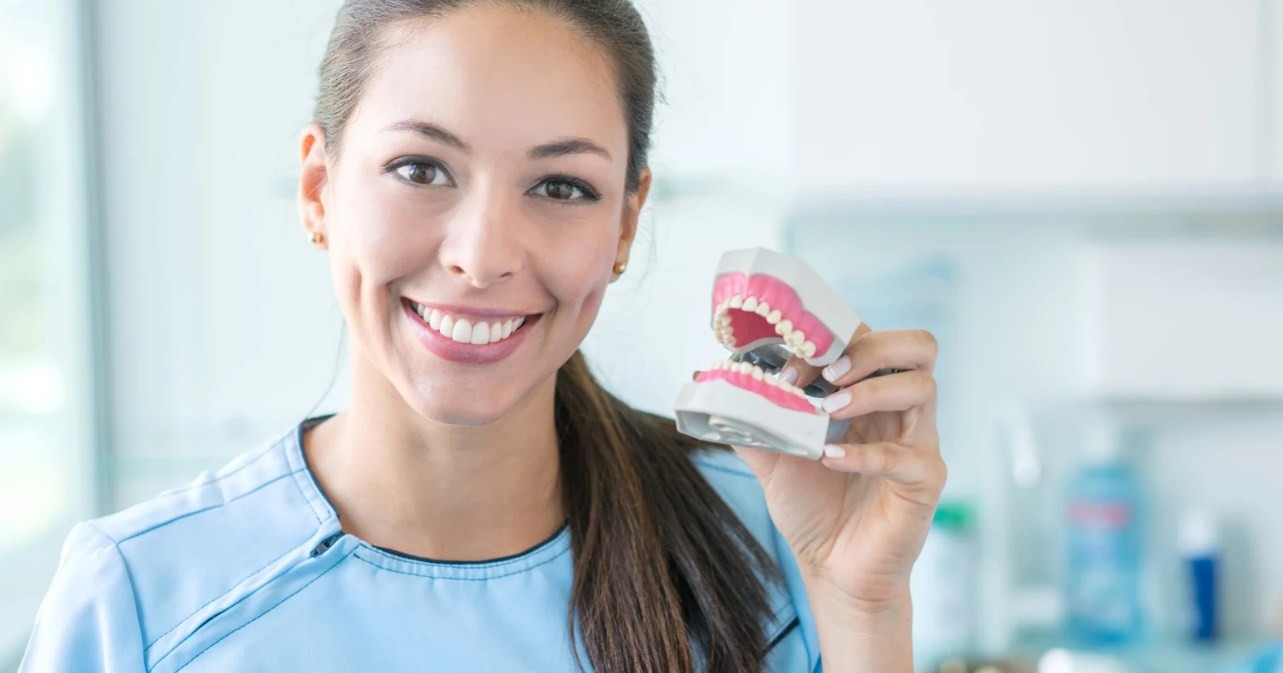
Perhaps the most dangerous habit of all is the "if it doesn't hurt, it's fine" mentality. Many people put off scheduling their dental visits until they feel pain.
The Danger: By the time you feel pain in a tooth, the problem is usually advanced. A small cavity does not hurt. A small crack does not hurt. Early gum disease does not hurt. Pain usually indicates that the decay has reached the nerve of the tooth or that an infection has formed.
Treating a problem at the "pain stage" is almost always more invasive, more expensive, and more time-consuming than treating it at the "prevention stage." Skipping routine cleanings also allows tartar (hardened plaque) to build up. You cannot remove tartar with a toothbrush; it must be scraped off by a professional. Leaving tartar on teeth guarantees gum inflammation.
Breaking the Habit:
Your teeth are meant to last a lifetime, but they require your help to do so. Breaking these ten habits can be challenging, especially if they are behaviours you have engaged in for years or are tied to stress relief. However, the reward is a healthier body, a brighter smile, and the avoidance of painful and costly dental procedures down the road.
Start small. Choose one habit to focus on this week—whether it is drinking more water, wearing your night guard, or being gentler with your toothbrush. Over time, these positive changes will compound, protecting your smile and ensuring that your teeth remain strong, functional, and beautiful for years to come.
At Newbury Dental, we believe in a proactive approach to oral health that prioritizes education and prevention alongside exceptional treatment. If you are concerned about the effects of these habits on your teeth, or if it has been a while since your last checkup, our compassionate team in South Edmonton is here to help get your smile back on track. Contact us today to schedule your appointment and experience dental care designed with your well-being in mind.
We look forward to meeting you! Call 780-760-3033, email info@newburydental.ca, or request an appointment online to set up your first visit. We’ll be in touch soon!